Emerging Challenges in Cyber Regulation: Navigating the Complexities of the Digital Age

- Introduction
The rapid expansion of digital technologies has transformed modern society, creating unprecedented opportunities for communication, commerce, governance, education, and innovation. The internet has become an essential infrastructure supporting economic growth and social development across the globe. However, alongside these advancements, cyberspace has also emerged as a domain characterized by complex legal, technological, and regulatory challenges. Governments, international organizations, businesses, and legal scholars are increasingly confronted with the task of developing effective cyber regulatory frameworks capable of addressing evolving threats while preserving innovation and fundamental rights. As technology continues to outpace legislation, cyber regulation faces numerous emerging challenges that require comprehensive legal, technical, and policy responses.
Cyber regulation refers to the collection of laws, policies, standards, and governance mechanisms designed to regulate activities conducted in cyberspace. It encompasses areas such as cybersecurity, data protection, privacy, cybercrime, digital governance, artificial intelligence, cross-border data flows, digital platforms, and emerging technologies. The dynamic nature of cyberspace makes regulation particularly difficult because cyber threats evolve rapidly, often transcending national borders and traditional legal frameworks.
- The Challenge of Rapid Technological Advancement
One of the most significant challenges in cyber regulation is the speed at which technology evolves. Emerging technologies such as Artificial Intelligence (AI), Machine Learning (ML), Blockchain, Quantum Computing, the Internet of Things (IoT), Cloud Computing, and Generative AI are transforming digital ecosystems at an unprecedented pace. Legislators and regulators frequently struggle to keep up with technological innovations, resulting in regulatory gaps and outdated legal provisions.
For instance, artificial intelligence systems can now generate content, make autonomous decisions, analyze massive datasets, and even mimic human behavior. Existing legal frameworks were not designed to address issues such as algorithmic accountability, AI bias, autonomous decision-making, and liability for AI-generated actions. Consequently, regulators must continuously adapt legal frameworks to accommodate technological developments while ensuring ethical and responsible use of emerging technologies.
- Increasing Sophistication of Cybercrime
Cybercrime has evolved from isolated hacking incidents into highly organized and financially motivated criminal enterprises. Modern cybercriminals employ sophisticated techniques such as ransomware attacks, phishing campaigns, identity theft, business email compromise, cryptocurrency fraud, and advanced persistent threats (APTs). These attacks often target governments, critical infrastructure, financial institutions, healthcare systems, educational institutions, and individual users.
The transnational nature of cybercrime creates significant regulatory difficulties. Cybercriminals may operate from one jurisdiction while targeting victims located in multiple countries, making investigation and prosecution extremely complex. Differences in national cybercrime laws, procedural rules, extradition treaties, and law enforcement capabilities often hinder effective enforcement. Regulators must therefore strengthen international cooperation mechanisms and harmonize cybercrime legislation to effectively combat cross-border cyber threats.
- Data Privacy and Protection Concerns
The digital economy relies heavily on the collection, processing, storage, and transfer of personal data. As organizations increasingly gather vast amounts of information about individuals, concerns regarding privacy, surveillance, data misuse, and unauthorized access have intensified. Data breaches involving sensitive personal information have become common, exposing millions of users to identity theft, financial fraud, and privacy violations.
Regulatory frameworks such as the European Union’s General Data Protection Regulation (GDPR) and India’s Digital Personal Data Protection Act, 2023 represent significant efforts to enhance data protection. Nevertheless, challenges remain regarding compliance, enforcement, cross-border data transfers, user consent, data minimization, and the balancing of privacy rights with legitimate business and governmental interests. Regulators must continuously update privacy laws to address emerging risks associated with big data analytics, artificial intelligence, biometric technologies, and digital surveillance systems.
- Cross-Border Jurisdictional Issues
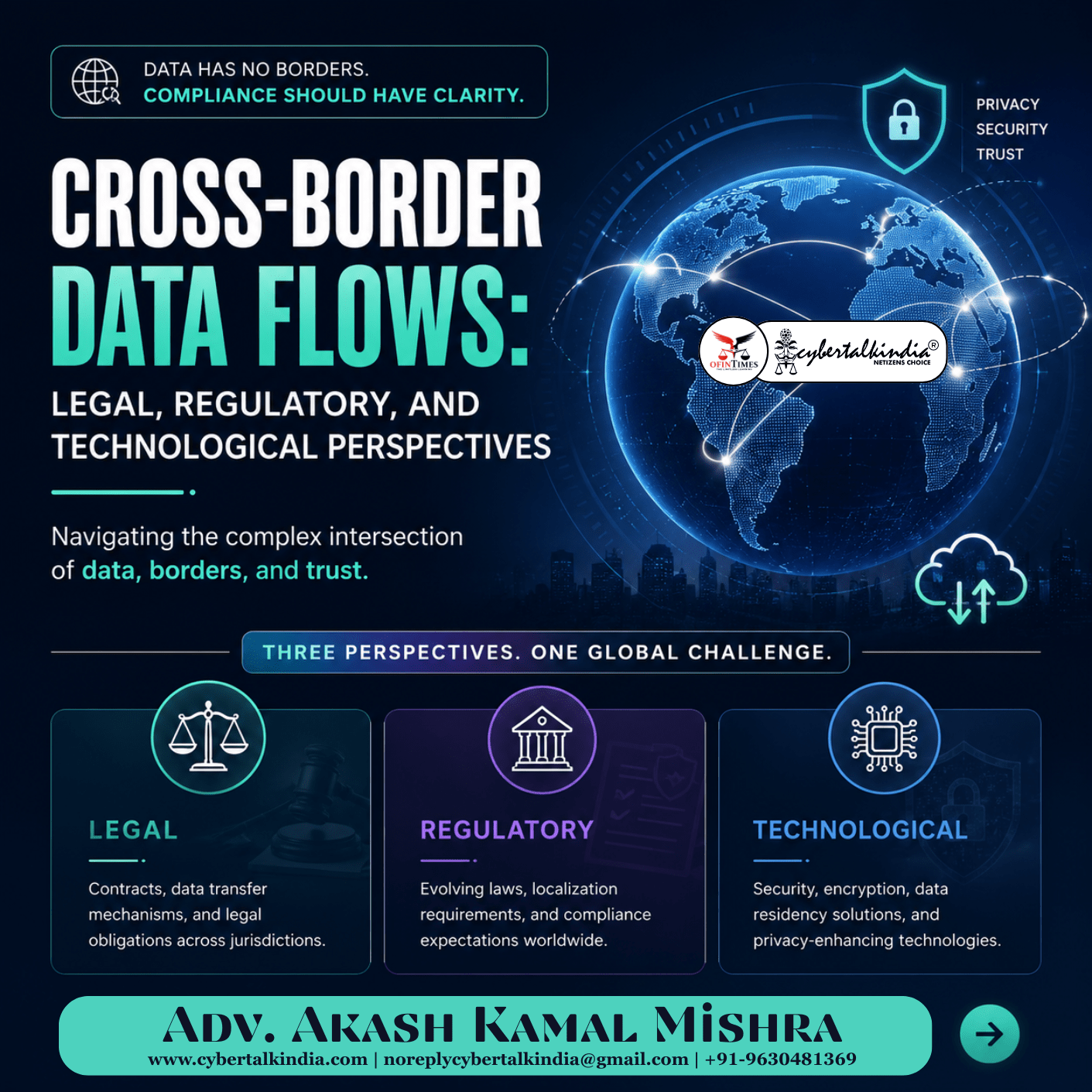
Cyberspace does not recognize geographical boundaries, yet legal systems remain largely territorial. This mismatch creates one of the most complex challenges in cyber regulation: jurisdiction. Determining which country’s laws apply to online activities, digital transactions, cybercrimes, and data processing operations is often difficult when multiple jurisdictions are involved.
Cross-border data flows further complicate regulatory oversight. Data generated in one country may be processed in another and stored in a third jurisdiction. Conflicting national laws concerning privacy, cybersecurity, data localization, and surveillance can create legal uncertainty for multinational organizations. Regulators must develop mechanisms for international cooperation, mutual legal assistance, and harmonized standards to address jurisdictional conflicts effectively.
- Regulation of Artificial Intelligence and Automated Systems
Artificial Intelligence has become a central focus of cyber regulation due to its transformative capabilities and associated risks. AI systems are increasingly used in healthcare, finance, education, law enforcement, employment, and public administration. While AI offers significant benefits, it also raises concerns regarding transparency, accountability, discrimination, misinformation, and ethical governance.
One major challenge is determining liability when AI systems cause harm. Questions arise regarding whether responsibility should rest with developers, manufacturers, operators, or users. Additionally, AI-driven decision-making may inadvertently perpetuate biases embedded in training data, leading to discriminatory outcomes. Regulators worldwide are exploring frameworks that promote trustworthy AI while ensuring transparency, explainability, fairness, and human oversight.
- Cybersecurity of Critical Infrastructure
Modern societies depend heavily on critical infrastructure sectors such as energy, telecommunications, healthcare, transportation, banking, and public utilities. Increasing digitalization has enhanced efficiency but has also expanded the attack surface for cyber threats. Cyberattacks targeting critical infrastructure can disrupt essential services, threaten national security, and cause significant economic losses.
The growing frequency of attacks against critical infrastructure highlights the need for robust cybersecurity regulations. Governments must establish mandatory cybersecurity standards, incident reporting requirements, risk management frameworks, and resilience measures. Public-private collaboration is equally essential, as much critical infrastructure is owned and operated by private entities.
- Challenges of Digital Platform Governance
Social media platforms, search engines, e-commerce marketplaces, and digital communication services play a central role in contemporary society. However, regulating digital platforms presents numerous challenges. Issues such as misinformation, hate speech, online harassment, extremist content, fake news, algorithmic manipulation, and content moderation have become major concerns for regulators.
Balancing freedom of expression with the need to prevent harmful content remains a difficult regulatory task. Excessive regulation may undermine democratic values and free speech, while inadequate regulation may enable the spread of harmful content and societal harm. Regulators must develop balanced approaches that promote accountability, transparency, and user safety without compromising fundamental rights.
- The Rise of Deepfakes and Synthetic Media
Advancements in artificial intelligence have enabled the creation of highly realistic deepfakes and synthetic media. These technologies can generate convincing audio, video, and images that appear authentic but are entirely fabricated. While deepfake technology has legitimate applications in entertainment, education, and accessibility, it also poses significant risks.
Deepfakes can be used for political manipulation, financial fraud, identity theft, reputational damage, and misinformation campaigns. Existing legal frameworks often struggle to address these emerging threats because traditional laws on defamation, fraud, and impersonation may not adequately cover AI-generated content. Regulators must develop specific legal mechanisms to address the misuse of synthetic media while preserving legitimate innovation.
- Internet of Things (IoT) Security Challenges
The Internet of Things has connected billions of devices ranging from smart home appliances and wearable devices to industrial control systems and medical equipment. While IoT technology enhances convenience and efficiency, it also introduces significant cybersecurity vulnerabilities.
Many IoT devices lack adequate security features, making them attractive targets for cybercriminals. Weak authentication mechanisms, unpatched software, and insecure communication protocols can facilitate large-scale cyberattacks. Regulatory frameworks must establish minimum cybersecurity standards for IoT manufacturers and ensure security-by-design principles throughout the product lifecycle.
- Quantum Computing and Future Regulatory Concerns
Quantum computing represents a revolutionary technological advancement with the potential to solve complex computational problems far beyond the capabilities of traditional computers. However, quantum computing also poses significant cybersecurity challenges. Current encryption systems that protect digital communications, financial transactions, and sensitive government information may become vulnerable to quantum attacks.
Regulators and policymakers must proactively prepare for the transition to post-quantum cryptography. Developing standards for quantum-resistant encryption and ensuring the security of digital infrastructure will become increasingly important as quantum technologies mature.
- Balancing Security and Civil Liberties
Cyber regulation often requires balancing competing interests between security and individual rights. Governments seek to enhance cybersecurity, prevent cybercrime, and protect national security. However, measures such as surveillance, data retention, and monitoring can potentially infringe upon privacy rights, freedom of expression, and civil liberties.
Finding the appropriate balance remains one of the most challenging aspects of cyber governance. Regulatory frameworks must incorporate principles of necessity, proportionality, transparency, and accountability to ensure that security measures do not undermine democratic values and constitutional protections.
- Capacity Building and Regulatory Expertise
Effective cyber regulation requires specialized technical knowledge, legal expertise, and institutional capacity. Many regulatory authorities face challenges in recruiting and retaining professionals with expertise in cybersecurity, artificial intelligence, digital forensics, and emerging technologies. The shortage of skilled cyber professionals can limit the effectiveness of regulatory enforcement and policy development.
Governments, academic institutions, and industry stakeholders must invest in cyber education, training programs, research initiatives, and professional development to build a competent workforce capable of addressing evolving cyber challenges.
- International Cooperation and Global Governance
Given the global nature of cyberspace, no single country can effectively regulate cyber activities in isolation. International cooperation is essential for combating cybercrime, addressing cybersecurity threats, protecting digital rights, and developing common standards for emerging technologies.
Organizations such as the United Nations, the International Telecommunication Union (ITU), INTERPOL, and regional bodies play important roles in promoting international cyber governance. However, geopolitical tensions, differing national interests, and varying regulatory approaches often complicate efforts to establish universally accepted cyber norms and standards.
- Conclusion
The evolving digital landscape presents a multitude of emerging challenges in cyber regulation that demand continuous adaptation and innovation. Rapid technological advancements, sophisticated cyber threats, data privacy concerns, artificial intelligence governance, critical infrastructure protection, digital platform accountability, deepfake technologies, and jurisdictional complexities require comprehensive and forward-looking regulatory responses. Effective cyber regulation must strike a delicate balance between innovation, security, privacy, economic development, and fundamental rights.
As societies become increasingly dependent on digital technologies, the importance of robust cyber governance will continue to grow. Governments, regulators, industry stakeholders, academia, and civil society must collaborate to develop adaptive, technology-neutral, and internationally coordinated regulatory frameworks capable of addressing the challenges of the digital age. Only through such collaborative efforts can cyberspace remain secure, trustworthy, inclusive, and conducive to sustainable technological progress.
- Tags: #cyberlaw #cybersecurity #cyberregulation #dataprotection #digitalprivacy #cybercrime #artificialintelligence #aiethics #internetgovernance #digitalgovernance #technologylaw #cyberawareness #cybersecurityindia #lawstudents #legalresearch #cyberlawindia #digitallaw #informationtechnologylaw #emergingtechnologies #cyberpolicy #privacylaw #digitalrights #cyberjurisprudence #legaleducation #futureoftechnology #akashkamalmishra